


Euchre 3D Card Game Online
4.69.79K Reviews
App Specs
- Version
- Varies with Device
- Updated On
- License
- Free
- Downloads
- 1,000,000+
- Developer
- A-Star Software LLC
- Categories
- Card
- Platform
- Android
Screenshots
 Analysis by AppCompare
I picked up Euchre 3D expecting a straightforward digital version of a familiar trick-taking game, and that is exactly where its appeal begins. It does not need a long tutorial or a complicated rules system to become playable. Within a short session, I was already thinking about which card to lead, whether to call trump, and how much I could trust my partner. That quick path from opening the game to making meaningful decisions is its strongest first impression.
This is a free card game from A-Star Software LLC, aimed at people who enjoy Euchre with either online opponents, friends, or computer-controlled partners and rivals. It is rated for Everyone, so the presentation is accessible rather than edgy or adult-oriented. The game has been around since June 6, 2014, and its longevity is telling: it is not relying only on launch-day curiosity. A 4.6 average from around 64 thousand ratings and more than a million installs suggest that many players have found enough value to keep it around.
My overall experience was less about flashy presentation and more about whether the game could recreate the small social tension of a real card table. It generally succeeds when I want a quick hand, a little practice, or a familiar game with friends who are not in the same room. The more important question, though, is whether that usefulness survives after the novelty fades. For me, the answer depends heavily on how much I enjoy Euchre itself and whether I use the multiplayer side regularly.
Why the first week feels so inviting
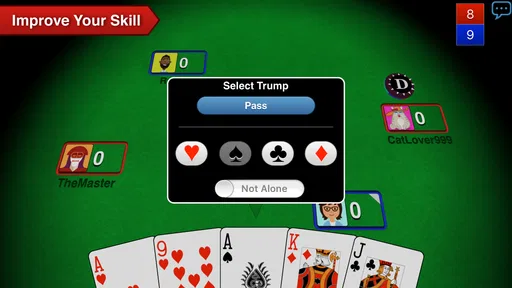
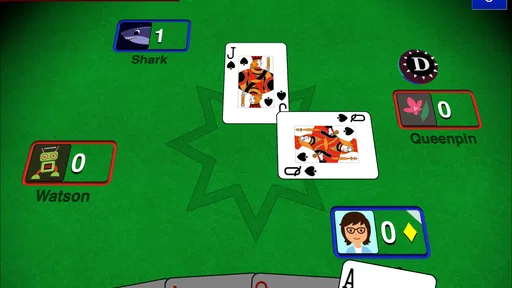
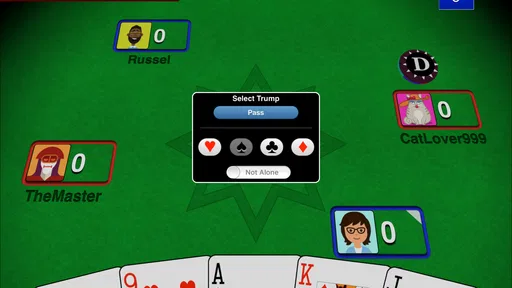
The opening appeal comes from the compact structure of Euchre. A hand does not demand a large time commitment, yet every decision can matter. Calling trump changes the shape of the hand, and choosing when to spend a strong card can affect more than the current trick. I like that the game gives me something to think about without asking me to learn a sprawling collection of special abilities, currencies, or deck-building rules.
The computer opponents are particularly useful during the first few sessions. I can play at my own pace and concentrate on the fundamentals instead of waiting for other people to be available. That makes the game suitable for a short break, especially when I want an actual decision-making activity rather than an idle app. The AI also gives new players a low-pressure place to become comfortable with trump selection, partner play, and counting what has already appeared.
One practical tip is to treat the first several games as observation exercises rather than attempts to win every hand. I found it more useful to notice which suits had already been played and whether the opposing team was likely to be short in a particular suit. That habit carries over into multiplayer much better than simply memorizing isolated rules. The game is simple to start, but it rewards attention once the basic mechanics become automatic.
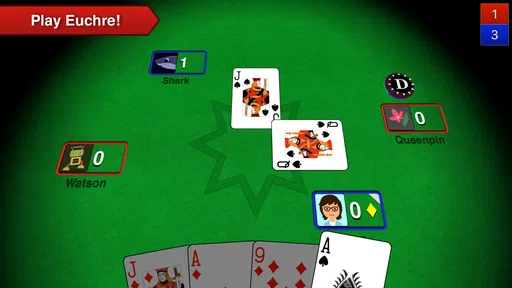
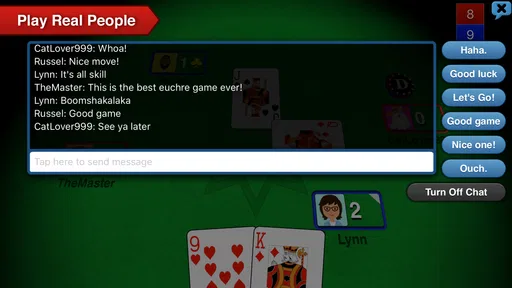
The online option adds a different kind of energy. Playing against people makes the uncertainty feel more authentic because a human partner may interpret the situation differently from an AI player. A safe-looking lead can become a mistake if the other player has a different plan, and a bold call can be satisfying when the table understands it. For someone who already has friends who play Euchre, that social layer is probably the clearest reason to install the game.
Worth Reading Before You Choose

EA SPORTS FC Mobile 26 Is a Bigger Football Game, but It Takes Time

Flipboard Shows What News Apps Must Do Beyond the Feed

Switching to Android Auto Means Rethinking Your Driving Routine

Google Calendar Makes a Crowded Week Easier to Manage

Ludo King Makes the Most of the Minutes Between Plans

Baby Panda World Brings Quick Play to Modern Phones, but Its Game Library Feels Busy
There is also a useful distinction between learning the game and testing your judgment. Computer play is better for repeating situations until they make sense. Online play is better for discovering whether your assumptions hold up against people who do not follow the patterns you expect. I would begin with AI matches, then move to friends or online multiplayer once I could explain why I was making a call rather than choosing randomly.
What makes the basic loop work
The best part of the design is the concentration of meaningful choices into a small number of cards. I am never managing a huge collection or waiting for a long animation sequence before getting another turn. That keeps the game approachable for a casual player while leaving room for experienced players to think about probability, table position, and partnership signals.
A realistic everyday use case is a short evening pause after dinner. I can play a few hands while waiting for someone, then stop without feeling as though I have abandoned a long campaign. The same quality works during travel or a lunch break, provided I am comfortable playing against bots when friends are unavailable. It is a better fit for fragmented free time than a card game built around lengthy matches or constant progression tasks.
Still, the first-week experience is not perfect for everyone. Someone who has never played Euchre may need help from an outside explanation or an experienced friend if the rules are unfamiliar. The game’s simplicity is an advantage once the rules are understood, but it does not turn Euchre into a universal card game overnight. Players looking for a broad tutorial journey, a story, or a large collection of modes may find the initial experience narrow.
What remains useful from month to month
After the first burst of curiosity, the game’s value comes from repeatability rather than constant novelty. Euchre has enough variation in the cards and enough uncertainty in the decisions to make another hand feel worthwhile, especially when I am trying to improve a specific weakness. I may focus on calling more carefully, preserving a likely winner, or recognizing when my partner’s play has already revealed the safest direction.
The strongest long-term use is as a practice table. I can use AI games to work on discipline: not overcalling simply because my hand looks exciting, not wasting a high card too early, and keeping track of suits instead of reacting only to the current trick. These are small skills, but they make the difference between playing passively and understanding the flow of a hand. The game is most rewarding when I approach it as a place to sharpen judgment, not just as a way to fill time.
Multiplayer gives the experience more staying power because the opponent is unpredictable in a way that scripted play cannot fully reproduce. Friends can also turn ordinary hands into a recurring social ritual. A group that already enjoys Euchre may keep the game installed for exactly that reason: it removes the need to gather a physical deck while preserving the basic rhythm of a shared match.
On the other hand, the month-to-month value is naturally limited by the boundaries of a focused card game. There is no need to pretend that every player will discover a new layer forever. If I do not enjoy repeating the same core rules, the game will eventually feel familiar rather than fresh. This is not a flaw in Euchre itself, but it does mean the app depends on the player’s relationship with the card game more than on a steady stream of new content.
The free entry helps with that decision. I can try it without paying upfront, which makes it easy to see whether the rules and pace suit me. Optional in-app purchases range from $0.99 to $19.99 per item, so I would approach those carefully and decide first whether the free experience already meets my needs. For a game whose main attraction is the card play, I would not spend simply because I felt pressure to keep up with a progression system.
How I would use it as a regular player
My preferred routine would be short and deliberate: a few AI hands for practice, followed by multiplayer sessions when friends are available. Before starting, I would decide what I am trying to improve. That could be reading the discard history, judging a marginal trump call, or avoiding predictable leads. Giving each session a purpose stops the game from becoming a repetitive tap-through exercise.
I would also avoid judging my ability from one lucky match. Euchre can make a poor decision look brilliant when the cards cooperate, and a sensible decision can fail when the distribution is unfavorable. Looking back at the choice rather than the result is more useful. If I called trump, I would ask whether the hand justified that call before deciding whether the outcome was good or bad.
For friends, the app works best when everyone agrees on the pace and expectations before playing. Some people want relaxed hands and conversation; others want to make every decision quickly. That difference can create more frustration than the cards themselves. The game is an effective digital table, but it cannot automatically solve the social problem of mismatched playing styles.
The maintenance burden is refreshingly small
One reason this game can earn lasting space is that it does not demand much attention outside the matches. I am not required to build a collection, check in at particular times, or maintain a complicated profile just to remain competitive. That makes it easier to return after a few days away. I can remember how to play without first catching up on a large system.
The low maintenance also makes the game suitable for people who dislike live-service pressure. A focused card app can sit quietly on a phone until I actually want to play. That is an important advantage over games that turn every return into a reminder of missed rewards or unfinished tasks. Here, the recurring value is straightforward: open it when I want a Euchre hand, then leave when I am done.
There is a trade-off, however. A low-maintenance game may feel less eventful to players who expect frequent changes, unlocks, or a sense of ongoing expansion. If the attraction of a mobile game is discovering new content every time it opens, this one may seem static. I see that as a deliberate strength for card-game traditionalists, but it is still a limitation for anyone who needs novelty to stay engaged.
The age rating of Everyone reinforces the uncomplicated nature of the experience. It is the sort of game I could recommend to a family member who already knows Euchre and wants a digital version without pointing them toward a more intense competitive title. That recommendation comes with a condition: the person should enjoy card play itself, because the app’s accessibility does not replace the need to like the underlying game.
Another maintenance issue is social availability. The multiplayer feature is most valuable when the people I want to play with are willing and able to join. If my usual group is inactive, I would rely more on AI matches, and that changes the feel of the app. The game remains playable, but the long-term experience becomes more solitary. This is why I would not install it solely for online play unless I already had a realistic group or regular opponents in mind.
Where fatigue can set in
The main source of fatigue is repetition without a personal goal. The rules are intentionally focused, so playing hand after hand with no attempt to improve can make the experience blur together. I noticed that the game stayed interesting when I was testing a decision or playing with friends, but it felt less compelling when I was clicking through matches automatically.
AI play can also become less satisfying once I understand its patterns. Bots are valuable because they are available and consistent, yet consistency can reduce the uncertainty that makes multiplayer exciting. I would use them for practice and convenience, not as a complete replacement for human opponents. Players who mainly want a challenging, unpredictable table may reach that limit quickly.
The other possible friction is the gap between casual and serious play. A newcomer may want time to think through each card, while an experienced player may see the correct move immediately. In a shared match, that difference can make the game feel either rushed or slow depending on who I am playing with. The app can provide the table, but the quality of the session still depends on the people around it.
I also would not choose this game for someone seeking a broad card-game collection. It is not the right recommendation if the goal is to switch between solitaire, poker, collectible cards, and strategy decks in one place. A general card suite would offer more variety. This title makes more sense when the specific attraction is Euchre and I want that one experience to be convenient on a phone.
Players who dislike paying for optional extras should simply decide their boundary before playing. The free price makes testing easy, but the presence of purchases means I would review each prompt rather than tapping through automatically. My own approach would be to play enough free matches to decide whether the core loop has become a habit before considering any optional spending.
Small habits that keep it from feeling stale
I found three habits especially useful. First, I would alternate between AI and human matches instead of relying on only one. Second, I would play fewer focused sessions rather than forcing a long streak after the game has stopped feeling engaging. Third, I would review the turning point of a hand: the call, the opening lead, or the moment a high card was used. Those habits create variety from the player’s decisions even when the underlying rules remain unchanged.
It also helps to accept that losing is part of the information. A failed call can show that I was overvaluing a single strong card. A lost trick can reveal that I forgot which suit had already been exhausted. Treating those moments as feedback gives the game a modest but real improvement loop. Without that mindset, the result screen becomes the only thing I notice, and the app loses much of its educational value.
My long-term verdict on keeping it installed
Euchre 3D earns lasting space when I want a dependable Euchre table, not an endlessly expanding mobile game. Its strengths are clear: quick access to a familiar trick-taking format, useful AI practice, online play with friends, and a free starting point. The mature release date and substantial player response also fit the impression I got from using it: this is an established, focused card game rather than a temporary novelty.
I would recommend it to someone who already enjoys Euchre, wants to learn through repeated hands, or needs a simple way to play with friends at a distance. It is also a good choice for a casual player who prefers meaningful decisions over elaborate progression systems. The game is easy to revisit because it does not ask me to maintain a complicated account of progress before I can enjoy another hand.
I would skip it if I need constant new content, a story-driven campaign, a wide range of card games, or a highly social community waiting at all hours. I would also hesitate to recommend it to someone who has no interest in learning Euchre, since the focused design leaves little else to carry the experience. In those cases, a broader card app or a more content-heavy strategy game would be a better match.
For me, the lasting test is simple: after the first-week curiosity disappears, do I still have a reason to open it? When I want to practice a decision, challenge a friend, or play a compact hand without setting up a physical deck, the answer is yes. When I am looking for surprise, progression, or a new system to explore, it is not the app I reach for. That makes it a specialized recommendation, but an honest one. If Euchre is already your game, this free version is easy to try and has enough practical value to remain useful long after the initial download.
Pros
- Smooth online multiplayer with quick matchmaking
- Clear card visuals make suits and tricks easy to follow
- Several rule options suit different Euchre preferences
- Practice mode helps new players learn the basics
- Games are short and convenient for casual play
Cons
- Online play depends heavily on a stable internet connection
- Match quality can vary with inexperienced or inactive players
- Some features may require in-app purchases or display ads
- Limited customization compared with larger card game platforms
- The interface may feel dated on newer high-resolution devices
FAQs for Euchre 3D Card Game Online
What is Euchre 3D Card Game Online?
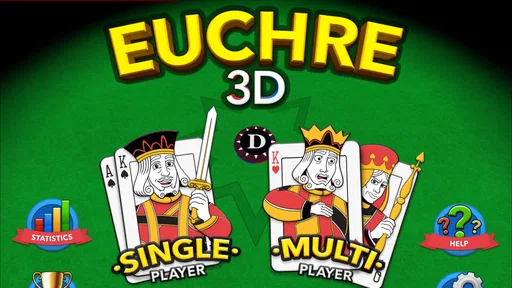
Euchre 3D Card Game Online is a digital version of the classic trick-taking card game, designed for players who enjoy competitive matches with a partner. The app generally combines online multiplayer, computer-controlled opponents, customizable rules, and a three-dimensional card-table presentation. It is suitable for both experienced Euchre players and newcomers who want to learn the basic flow through practice games.
Can I play Euchre 3D offline without an internet connection?
The availability of offline play may depend on the version and platform you install. In general, Euchre 3D includes computer opponents or practice modes that can be useful when you are not connected, while online matchmaking and multiplayer features require an internet connection. Before downloading, check the current store description because some functions, advertisements, updates, or account-related features may still require connectivity.
Is Euchre 3D Card Game Online free to download and play?
The game is commonly offered as a free download, but the exact monetization model can vary between Android and iOS versions. You may encounter advertisements, optional purchases, or premium features intended to remove ads or provide additional customization. The core card-game experience is usually accessible without paying, although it is worth reviewing the app-store listing for current in-app purchase details before installing.
Does the game support real-time multiplayer with friends or other players?
Euchre 3D Card Game Online is primarily intended to provide an online multiplayer experience, allowing users to compete in matches with other people rather than only playing against artificial intelligence. Depending on the current release, you may be able to join public games, invite friends, or use matchmaking. Multiplayer quality can depend on your connection, server availability, and the number of active players.
Is Euchre 3D suitable for beginners who have never played Euchre?
Yes, beginners can use the game to become familiar with Euchre, although the learning experience may vary according to the available tutorials and help screens. New players should understand concepts such as trump, bowers, bidding, partnerships, and trick-taking before entering serious online matches. Starting with practice games against computer opponents is recommended, as it lets you learn the rules and scoring at a comfortable pace.


